
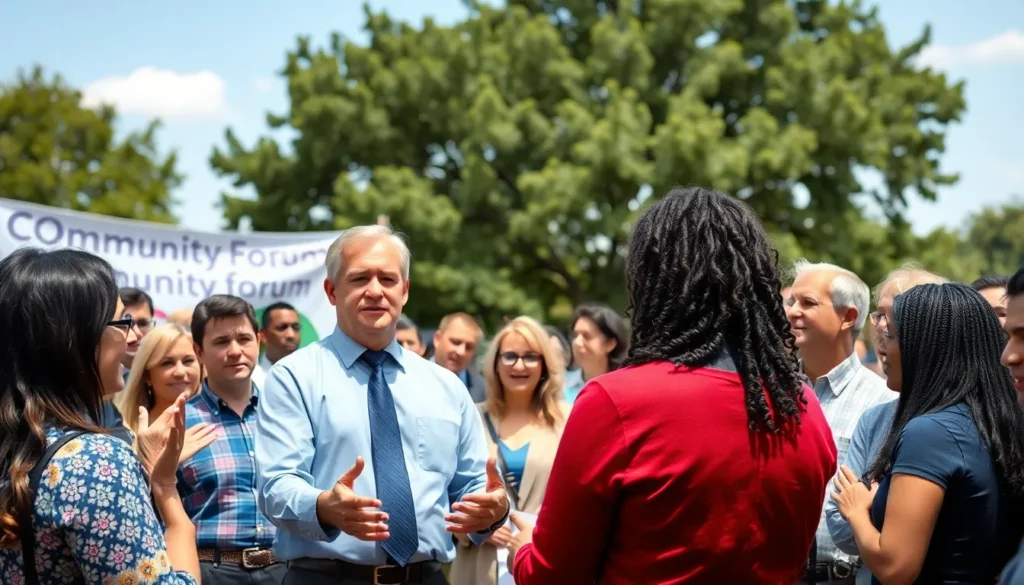
Public discourse shapes societies, influencing opinions and driving change. In an age where information flows freely and rapidly, the way people engage in discussions about politics, culture, and social issues has never been more crucial. It’s not just about sharing opinions; it’s about fostering understanding and collaboration among diverse perspectives.
As debates unfold across various platforms, the quality of public discourse can significantly impact democratic processes and community cohesion. By examining the dynamics of these conversations, one can uncover the challenges and opportunities that arise in today’s interconnected world. Understanding public discourse isn’t just for scholars; it’s essential for anyone who wants to navigate and contribute to the conversations that matter.
Overview of Public Discourse
Public discourse refers to discussions and dialogues that occur within society, encompassing a wide array of topics such as politics, culture, and social issues. This discourse shapes public opinion and influences societal norms.
Definition of Public Discourse
Public discourse signifies communication among individuals in a shared space, focusing on subject matters of collective interest. It includes debates, discussions, and dialogues in various forms, from traditional town hall meetings to social media exchanges. Public discourse serves as a platform for expressing diverse viewpoints and fosters critical thinking among participants.
Importance in Society
Public discourse plays a crucial role in shaping societal values and democracy. It encourages participation from a wide range of voices, enhancing representation and understanding within communities. Effective public discourse contributes to informed decision-making and civic engagement. Additionally, it helps bridge gaps between differing perspectives, fostering collaboration and social cohesion. High-quality discourse supports the democratic process by promoting transparency, holding authorities accountable, and facilitating the exchange of ideas vital for societal progress.
Historical Context
Public discourse has roots that stretch back to ancient civilizations, shaping societies and ideologies over centuries. Understanding its evolution provides insight into contemporary conversations and their significance.
Evolution of Public Discourse
Public discourse has evolved significantly since ancient Greece, where philosophers like Socrates and Plato encouraged dialogue as a method of inquiry. Over time, advancements in communication, from the printing press to digital platforms, transformed public engagement. The Enlightenment era marked a pivotal shift, as public forums expanded access to knowledge and fostered debate on rights and governance. In modern times, social media platforms like Twitter and Facebook play a crucial role in facilitating instant discussions, allowing diverse voices to intersect and influence civic life rapidly.
Key Figures and Movements
Numerous key figures and movements have shaped the landscape of public discourse throughout history.
- Socrates: Promoted dialogue and questioning to uncover truths in individual understanding.
- John Stuart Mill: Advocated for free speech and the marketplace of ideas, emphasizing the importance of diverse perspectives.
- Martin Luther King Jr.: Utilized powerful rhetoric and public oratory to inspire social change during the Civil Rights Movement.
- The Women’s Suffrage Movement: Mobilized public discourse around gender equality and voting rights, leading to significant legal reforms.
- The Internet Revolution: Enabled platforms for citizen journalism and grassroots activism, encouraging global participation in discussions on pressing issues.
These figures and movements illustrate how public discourse has served as a vehicle for social progress and democratic engagement, reflecting society’s evolving values and priorities.
Current Trends
Public discourse continues to evolve rapidly, influenced by technological advancements and societal changes. Two significant trends shaping this landscape are the impact of social media and increasing polarization.
Impact of Social Media
Social media platforms significantly affect public discourse by serving as venues for widespread discussion and interaction. They facilitate the rapid sharing of ideas, opinions, and information, enabling diverse voices to participate in conversations. Platforms like Twitter, Facebook, and Instagram amplify marginalized perspectives and allow immediate engagement with current events.
However, these platforms also present challenges. Algorithms often prioritize sensational content, which can distort narratives and create echo chambers. Research shows that information spread on social media can lead to misinformation, affecting public opinion and decision-making processes. Despite these challenges, social media remains a critical tool for civic engagement, helping individuals mobilize around causes and enhancing collective action.
Polarization in Public Discourse
Polarization in public discourse has intensified in recent years, driven by divisive politics and social issues. This phenomenon results in sharply contrasting views within society, hindering constructive dialogue. Factors contributing to polarization include selective exposure to media, group identity, and the rise of partisan commentary.
Consequences of polarization manifest in various ways, such as decreased willingness to engage with opposing viewpoints and increased hostility online. Studies indicate that this environment reduces the chance for compromise and collaboration among differing groups, impacting democratic processes and community cohesion. To counteract polarization, efforts to promote empathy, active listening, and inclusive dialogue have gained traction, aiming to bridge divides and foster understanding.
Challenges Faced
Public discourse faces several significant challenges that undermine its effectiveness. Misinformation and disinformation along with issues surrounding censorship and free speech create barriers to meaningful engagement and understanding.
Misinformation and Disinformation
Misinformation refers to false or misleading information shared without harmful intent, while disinformation involves the deliberate spread of falsehoods to deceive. Both phenomena disrupt public discourse by skewing perceptions and degrading trust in information sources. According to the Pew Research Center, 64% of Americans believe disinformation has a major impact on politics, causing confusion among citizens. This confusion impedes informed decision-making, as individuals struggle to discern credible information from false narratives. Combatting misinformation requires robust media literacy initiatives, critical thinking skills, and fact-checking resources to help individuals navigate the complex information landscape effectively.
Censorship and Free Speech
Censorship affects public discourse by restricting the flow of ideas and information. Governments, organizations, and social media platforms may impose limitations on speech to control narratives, resulting in public backlash and diminished civic engagement. A survey by the Knight Foundation indicated that 69% of Americans feel that free speech is under threat. This climate of fear can stifle important conversations on sensitive topics, hindering the exchange of diverse perspectives. Striking a balance between protecting free speech and addressing harmful speech presents a complex challenge, requiring ongoing dialogue about the principles of democracy and respect for differing opinions. Facilitating open forums and encouraging a culture of tolerance can help mitigate the negative effects of censorship on public discourse.
Best Practices for Engaging in Public Discourse
Engaging in public discourse requires mindful techniques to foster positive interactions. Practicing constructive communication and promoting inclusivity significantly enhances the quality of discussions.
Constructive Communication
Constructive communication focuses on respectful dialogue that encourages understanding. Participants in public discourse should:
- Listen Actively: Listening involves fully concentrating on the speaker without planning responses while they talk. It fosters trust and ensures all voices are heard.
- Seek Clarification: Seeking clarification promotes comprehension and reduces misunderstandings. Asking questions about unclear points invites elaboration and keeps conversations focused.
- Acknowledge Different Perspectives: Acknowledging various viewpoints creates an environment where all participants feel valued. This each-voice-matters approach encourages further contributions.
- Use Neutral Language: Using neutral language helps prevent conversations from becoming confrontational. Focus on objective terms instead of emotionally charged words to maintain civility.
- Stay Focused on the Topic: Staying on topic ensures discussions remain productive and relevant. Avoid straying into unrelated areas that may dilute the original intent of the conversation.
Promoting Inclusivity
- Encourage Diverse Participation: Encouraging individuals from different backgrounds and experiences to join conversations enriches discussions and helps challenge biases.
- Facilitate Safe Spaces: Creating safe spaces encourages open dialogue without fear of judgment. It allows individuals to express their thoughts and opinions authentically.
- Recognize Power Dynamics: Recognizing existing power dynamics helps address imbalances that may silence marginalized voices. Awareness facilitates opportunities for equitable contribution.
- Engage Underrepresented Communities: Engaging with underrepresented communities ensures their perspectives are included. Outreach efforts can break barriers to participation in public discourse.
- Promote Collaborative Solutions: Promoting collaborative solutions encourages joint problem-solving rather than divisive debate. This approach fosters a sense of community and shared purpose.
Public discourse remains a cornerstone of democratic society. It fosters a culture of understanding and collaboration among diverse perspectives. As individuals engage in meaningful conversations about pressing issues they contribute to the collective growth and resilience of their communities.
The challenges posed by misinformation and polarization highlight the need for a renewed commitment to effective dialogue. By embracing inclusivity and promoting critical thinking individuals can navigate the complexities of today’s discourse landscape.
Ultimately public discourse is not just about exchanging ideas; it’s about shaping the future. Encouraging open and respectful conversations can lead to a more informed and engaged society ready to tackle the challenges ahead.